
Search engine optimization has never been static. From keyword stuffing to semantic search, from backlinks to intent modeling, every era of search has demanded adaptation.
It is an operational shift.
For years, artificial intelligence has assisted marketers suggesting keywords, generating content drafts, and automating repetitive tasks. Today, AI is evolving beyond assistance into autonomous execution.
Instead of waiting for prompts, modern AI systems can plan workflows, gather data, execute
optimization tasks, monitor performance, and refine outcomes continuously.
This emerging paradigm is known as Agentic SEO.
It represents the transition from SEO as a manual discipline to SEO as an intelligent, self-improving system.
The Emergence of the Agentic AI Era
The current wave of AI innovation is defined by systems capable of independent action. Unlike traditional software tools that require explicit commands, agentic systems operate with defined objectives and decision logic, enabling them to act toward goals rather than simply respond to inputs.
In the context of search marketing, this means deploying autonomous agents that can:
- analyze search landscapes
- monitor technical health
- evaluate competitive positioning
- identify optimization opportunities
- implement improvements
- track performance outcomes
Why Agentic SEO Is Emerging Now
The rise of agentic systems is not accidental. It is a response to the increasing complexity of modern search ecosystems.
Growing Complexity of Search Optimization
SEO today requires simultaneous mastery of:
- semantic search intent modeling
- technical performance monitoring
- structured data implementation
- topical authority development
- AI answer visibility
- user experience signals
- continuous content freshness
The sheer breadth of ongoing tasks makes manual execution increasingly unsustainable.
Efficiency and Scalability Pressures
Modern organizations face pressure to produce more content, optimize faster, and adapt quickly to search volatility all while controlling operational costs.
- eliminating repetitive manual workflows
- accelerating execution cycles
- improving decision speed through real-time insights
- enabling scalability without proportional increases in staffing
This is not about replacing human teams. It is about augmenting their capacity and enabling strategic focus.
Understanding Agentic SEO: Beyond Traditional Automation
Automation in SEO is not new. Scheduling tools, rank trackers, and technical crawlers have long reduced manual effort. Agentic SEO goes significantly further.
It involves autonomous systems capable of executing multi-step workflows, making decisions based on contextual data, and refining outcomes over time.
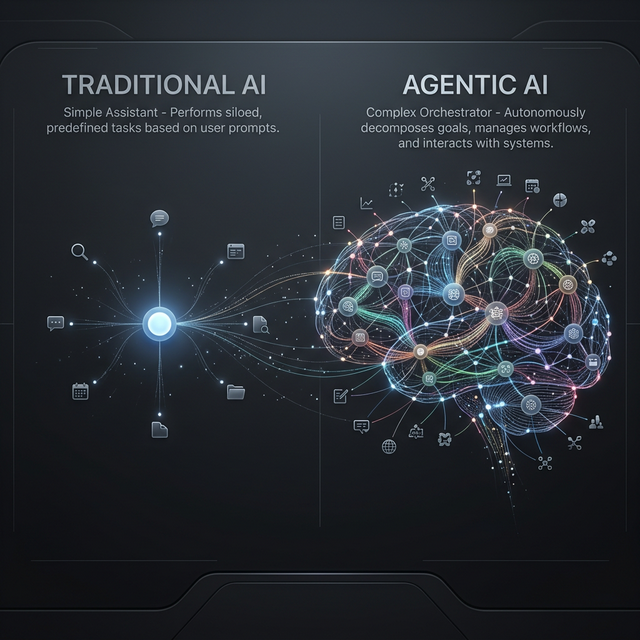
From isolated task execution to autonomous workflow orchestration.
Traditional AI Tools vs Agentic AI Systems in SEO
| Traditional AI Tools (Assistants) | Agentic AI Systems (Operators) |
|---|---|
| respond to prompts | plan workflows |
| generate outputs on request | execute sequences of tasks |
| execute isolated tasks | monitor outcomes and adjust dynamically |
This shift from suggestion to execution represents the core innovation of agentic SEO.
Positioning Agentic SEO Within the Modern Search Optimization Stack
As AI reshapes search behavior, multiple optimization frameworks have emerged.
- Generative Engine Optimization (GEO): Focuses on ensuring content is synthesized into AI-generated answers and summaries.
- Answer Engine Optimization (AEO): Ensures content is structured so AI systems can extract, cite, and deliver precise answers.
- Agentic SEO: Focuses on the execution layer, automating the research, optimization, monitoring, and refinement processes.
These approaches are complementary; together, they form the future-ready search strategy stack.
From Reactive Optimization to Proactive Search Intelligence
Historically, SEO has been reactive. Rankings drop, traffic declines, or competitors outrank content and teams respond.
Agentic systems enable a proactive model. Rather than waiting for problems to emerge, agents continuously monitor performance indicators and identify emerging risks or opportunities. They can detect ranking volatility patterns, emerging competitor content strategies, content freshness gaps, technical performance degradation, and evolving search intent signals.
How Agentic Systems Interact with the Digital Ecosystem
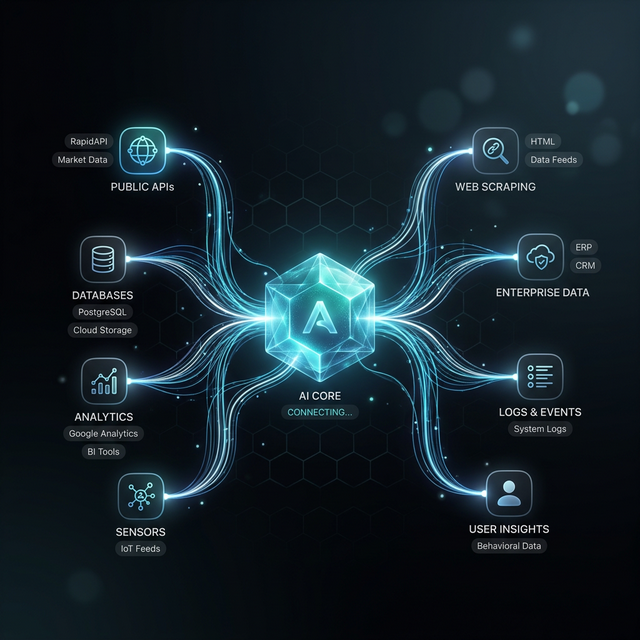
Agentic AI seamlessly connecting multiple data streams for continuous intelligence.
One of the defining strengths of agentic systems is their ability to interact with multiple data environments. Agents can integrate with APIs, analytics platforms, crawling tools, and search data sources to gather real-time intelligence.
They may scrape search engine results pages, analyze backlink profiles, monitor competitor content updates, extract structured performance metrics, and update dashboards with live insights. This eliminates delays inherent in manual reporting cycles.
Memory and Context: The Intelligence Multiplier
Traditional prompt-based AI tools operate without persistent context. Each session begins anew.
Agentic systems, by contrast, retain memory across workflows.
Always-On Optimization Through Core Directives
Agentic systems operate under standing instructions rather than one-time prompts. These core directives define monitoring parameters and performance goals. SEO evolves from periodic audits into continuous oversight.
SEO as a Living System: Linked Workflows and Continuous Refinement
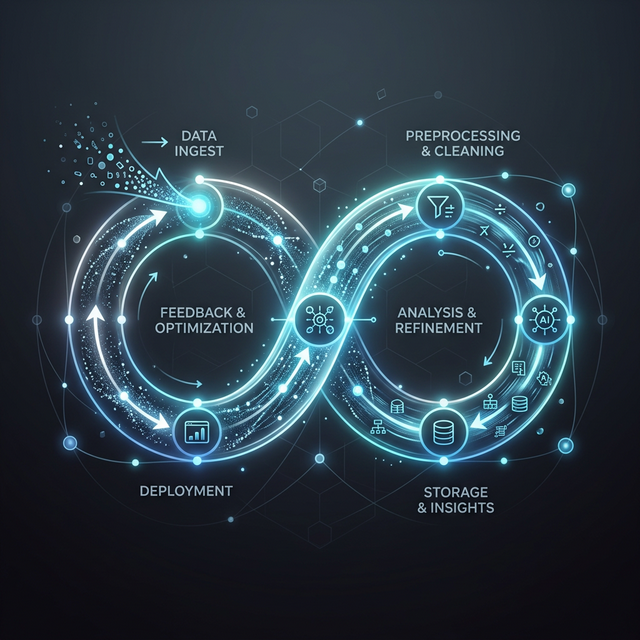
SEO transformed into a continuous loop of execution and refinement.
Agentic workflows are not isolated tasks; they are interconnected processes.
Data gathered during research informs analysis. Analysis guides strategic recommendations. Execution implements improvements. Monitoring evaluates impact. Refinement enhances future actions. Optimization becomes an adaptive ecosystem rather than a static checklist.
The Critical Role of Human Expertise
Despite increasing autonomy, agentic SEO is not a replacement for human expertise.
- AI excels at: data processing, pattern recognition, and repetitive execution.
- Humans remain essential for: strategic prioritization, brand voice and positioning, contextual judgment, ethical considerations, and creative storytelling.
The highest-performing organizations use AI to scale execution while humans guide strategic direction.
Validation: Safeguarding Accuracy and Brand Integrity
Automation increases operational speed but can amplify errors if left unchecked. AI-generated outputs may overlook nuance or misinterpret context. Human validation ensures factual accuracy, clarity of meaning, alignment with brand messaging, and audience appropriateness.
Iterative Learning: Improving Agent Performance Over Time
Agentic systems improve through refinement. As experts adjust instructions, refine workflows, and provide domain-specific guidance, outputs become increasingly aligned with business objectives.
Smart Ideation, Topic Mapping, and Trend Archaeology

Mapping complex topical relationships to build structural authority.
For many organizations, ideation represents the ideal entry point. Agents can construct knowledge graphs that reveal the full topical landscape, enabling organizations to build true topical authority rather than isolated keyword coverage.
Moreover, agentic systems analyze peripheral signals to detect emerging vocabulary and themes before they reach mainstream search demand. Early adoption enables brands to establish authority before competition intensifies.
Reverse-Engineering Competitor Authority Through Cluster Intelligence
Competitor analysis traditionally focuses on keyword rankings. Agentic systems go deeper by mapping content clusters and structural relationships. This reveals how competitors build authority across interconnected topics.
Auto-Evolution: The Future of Search Marketing
The future of SEO will be defined by systems that continuously monitor, diagnose, and optimize performance. Competitive advantage will belong to organizations capable of evolving faster than manual workflows allow.
- Agentic SEO represents a shift from manual optimization to intelligent execution systems.
- Automation enables continuous improvement while freeing teams to focus on strategy.
- Memory and contextual awareness drive smarter decision-making.
- The future of search optimization is autonomous, adaptive, and intelligence-driven.
Frequently Asked Questions
What is Agentic SEO?
Agentic SEO uses autonomous AI agents to execute SEO workflows such as research, optimization, monitoring, and performance improvement without continuous human prompting.
How is Agentic SEO different from traditional SEO?
Traditional SEO relies heavily on manual execution and tool-assisted insights, while Agentic SEO automates execution and continuously refines performance.
Is Agentic SEO the same as GEO or AEO?
No. GEO focuses on AI answer visibility, AEO structures content for answer extraction, and Agentic SEO automates optimization workflows.
Do businesses still need SEO experts?
Yes. AI enhances execution efficiency, but human expertise remains essential for strategy, creativity, and contextual decision-making.
Can small businesses implement Agentic SEO?
Yes. No-code automation platforms and accessible AI tools make agentic workflows feasible for small and mid-sized teams.
Final Thoughts
Search visibility is no longer defined solely by rankings. It is defined by intelligence, execution speed, adaptability, and authority.
Agentic SEO represents the operational future of digital marketing where autonomous systems execute workflows continuously while humans guide strategic direction and creative vision.
The future of SEO is not just optimized.
It is autonomous.